Rugs & Allergies:
Myths, Benefits and a Healthy Home
Why the right rug can support a healthier living environment
It is often said that rugs make allergies worse — that bare floors are the only option for sensitive households. But new research, and decades of experience at Louis De Poortere, tell a very different story: a quality rug, properly maintained, can reduce airborne allergens and contribute to a more comfortable, healthier home.
Let us unpack the misconceptions, explore the real benefits, and see how a rug can support — rather than compromise — your wellbeing.
Mythe : « Les tapis aggravent les allergies »
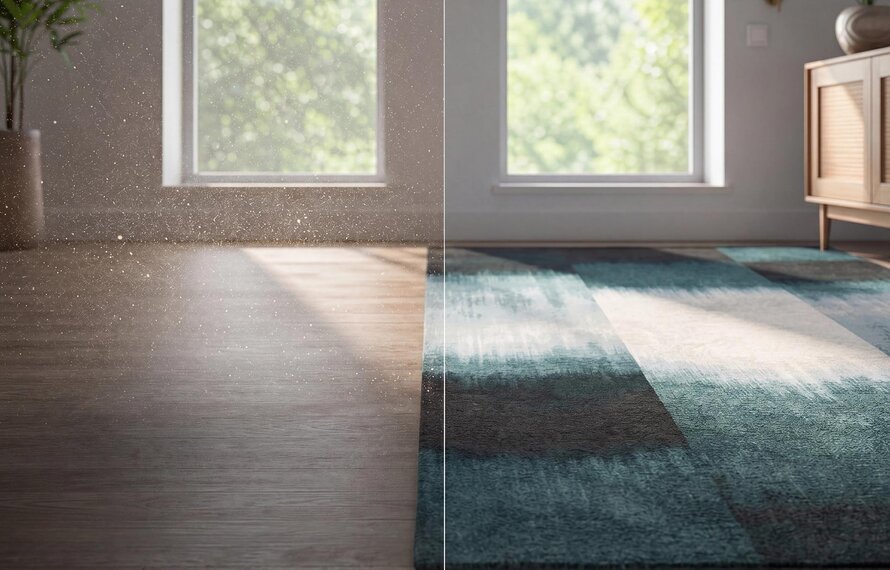
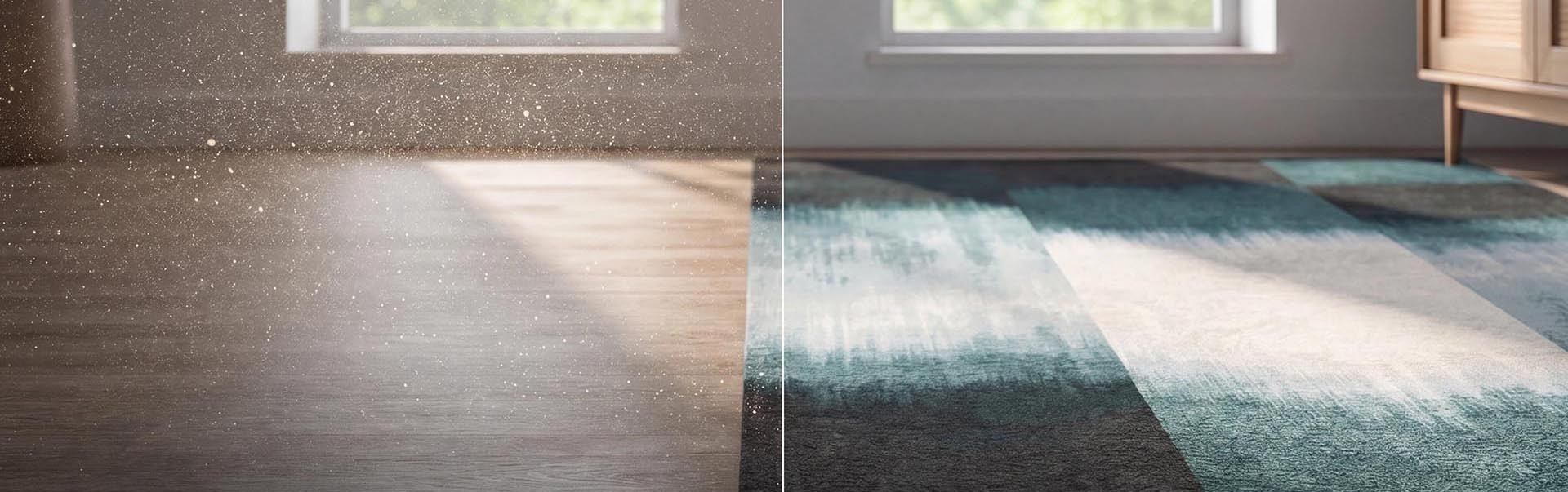
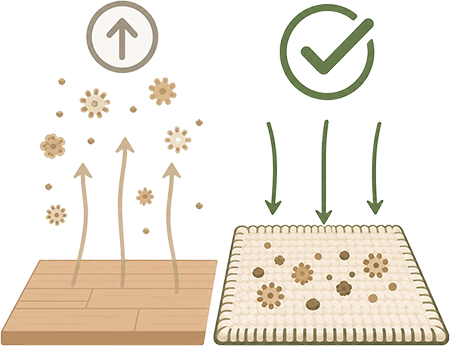 | This idea comes from an era when thick wall-to-wall carpets were hard to clean and accumulated dust, pollen and pet hair. But modern flatweave rugs — like those made by Louis De Poortere — are a different story entirely. Several studies show that hard floors allow lightweight allergens to circulate freely in the air, especially when people walk on them or a draught occurs. A flatweave rug with a tight construction traps particles and prevents them from becoming airborne — until you vacuum them away. |
✦ | Louis De Poortere Wilton rugs go even further: woven in wool, they benefit from a natural advantage that is often overlooked. 2025 update: wool is now recognised as naturally resistant to dust mites thanks to its lanolin content. True allergy to wool fibre itself is in fact extremely rare — as recent research confirms. |
The real benefits of rugs for allergy sufferers
When properly used and maintained, rugs offer real advantages in managing indoor allergens: ✔ Reduction of airborne dust and pollenFine particles settle into the fibres rather than floating through the air. ✔ Improved indoor air qualityWith regular cleaning, a rug helps prevent allergens from recirculating. ✔ Support for asthma and respiratory sensitivityLess dust in the air = fewer triggers. ✔ Extra warmth and comfortEspecially in bedrooms and children's spaces, where soft surfaces reduce cold and irritation. | 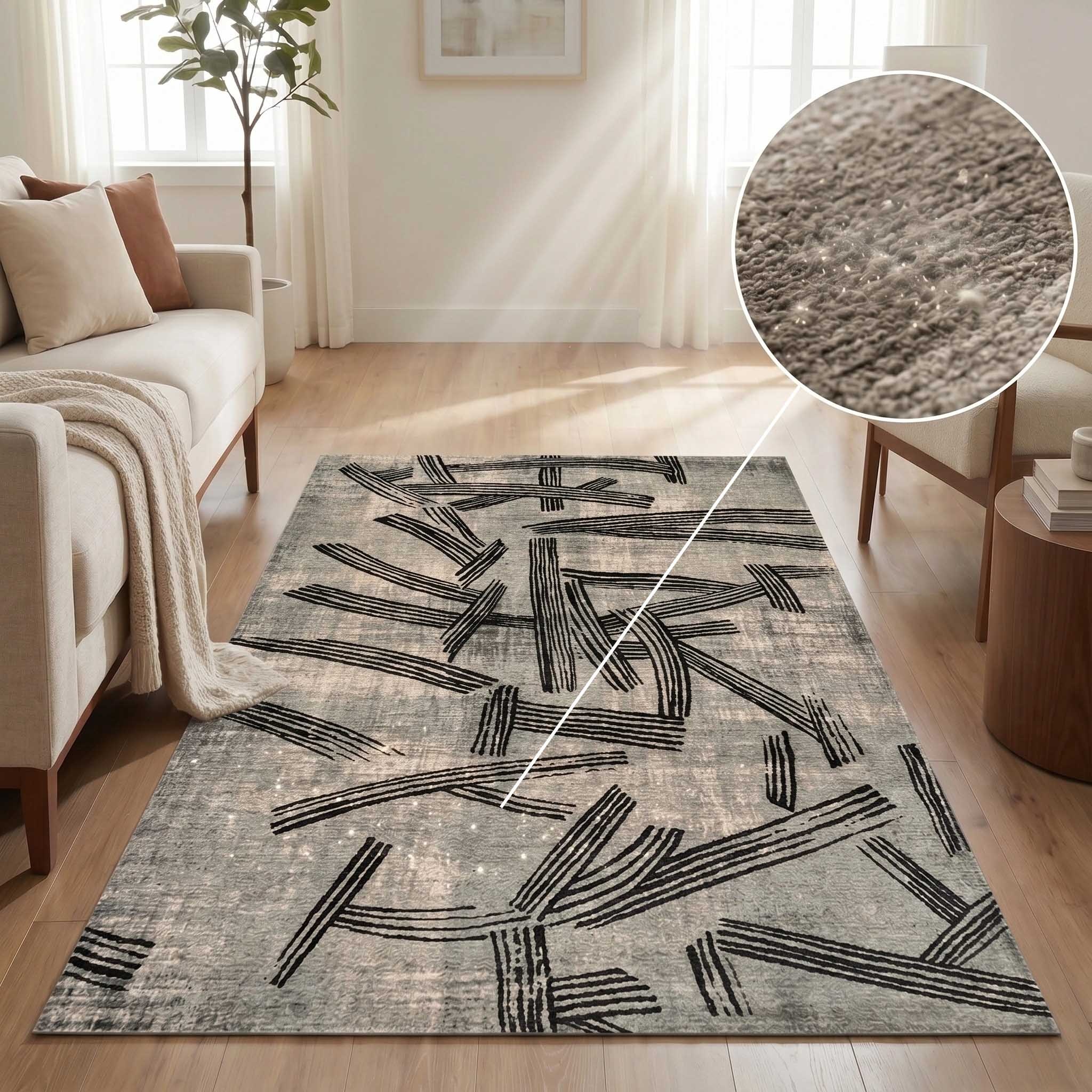 |
2025-2026 trends: the healthy rug market is evolving |
New attention is also being placed on VOCs (volatile organic compounds): conventional rugs can off-gas chemicals for several years. Certified labels guarantee low levels, particularly protecting children and babies who spend more time on the floor.
≋ Washable rugsThe standout trend for allergy-prone households — designed to go in the washing machine. | ✦ Natural & recycled fibresRecycled PET, organic cotton, antimicrobial bamboo: +30% in popularity this season. | ✔ Health certificationsOEKO-TEX, GOTS and GREENGUARD Gold are becoming essential benchmarks. |
Choosing the right rug to control allergens
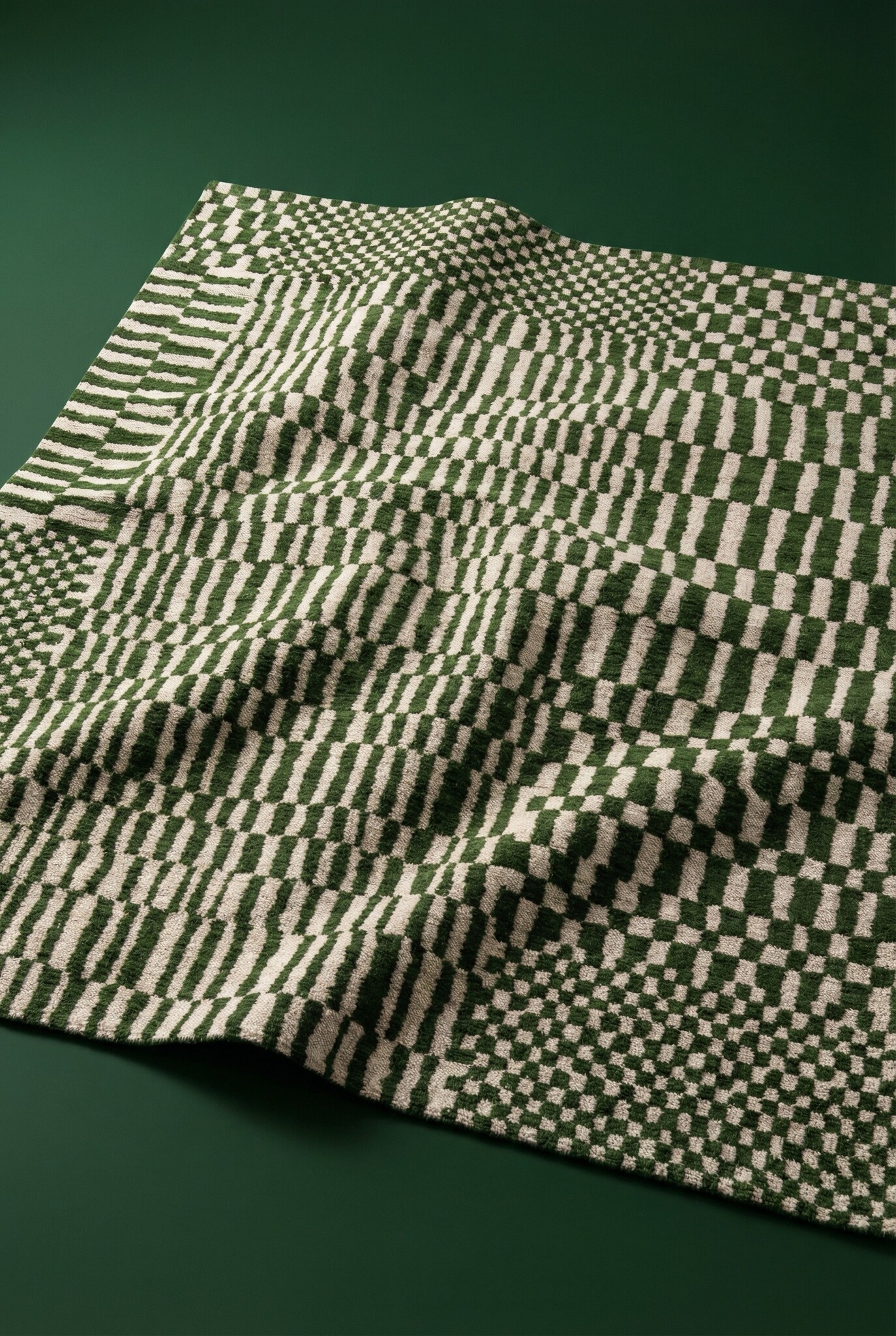
Not all rugs are equal. For allergen-sensitive households, here are the key criteria to look for:
 |
| ||||||
Maintenance tips for a healthier home
To maximise the allergen-reducing benefits of your rug:
◎ Vacuum regularlyAt least twice a week, using a vacuum with a HEPA filter. | ≋ Air the rugRoll it up and shake it outside, or leave it in a dry, sunny spot. |
✦ Treat stains immediatelyResidual moisture can encourage mould if left untreated. | ↻ Rotate the rugReduce wear and dust build-up in high-traffic areas. |
Style, comfort & health — all three at once
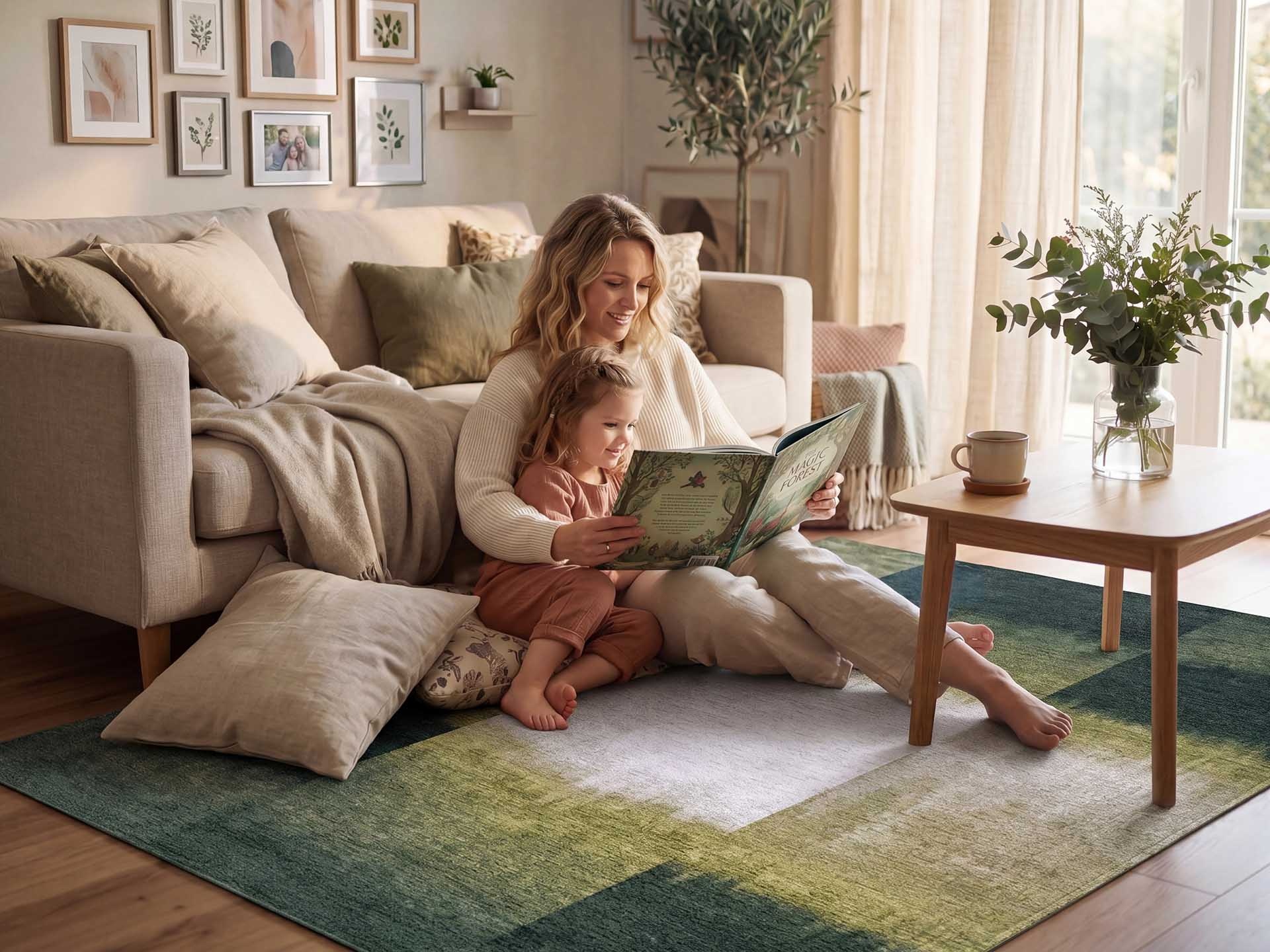
With the right rug, you do not have to choose between aesthetics and wellbeing. Louis De Poortere rugs are designed to offer visual beauty, emotional warmth and breathable comfort — even for sensitive individuals.
|  |
Conclusion: A softer surface for better living
Rugs can be part of the problem — or part of the solution. It all comes down to material choice, construction and simple maintenance.
At Louis De Poortere, we weave with the future in mind — a future where design and health go hand in hand.
Your home should be a space of serenity.
Let your rug be part of that.